Wednesday, February 29, 2012
Everything's cuter when it's French, part 2
If you say it in French, aspiring to be the "perfect secretary" doesn't seem half bad. Imagine the outfits a parfait secretaire must wear! Doubtless entire chapters are devoted to the art of scarf-knotting but I can't read them because, you know, they're in French. Still, I think this book was worth a dollar just for its flashy cover design.
The French also manage to make umbrella sales seem like a desirable vocation.
Tuesday, February 28, 2012
Everything's cuter when it's French, part 1

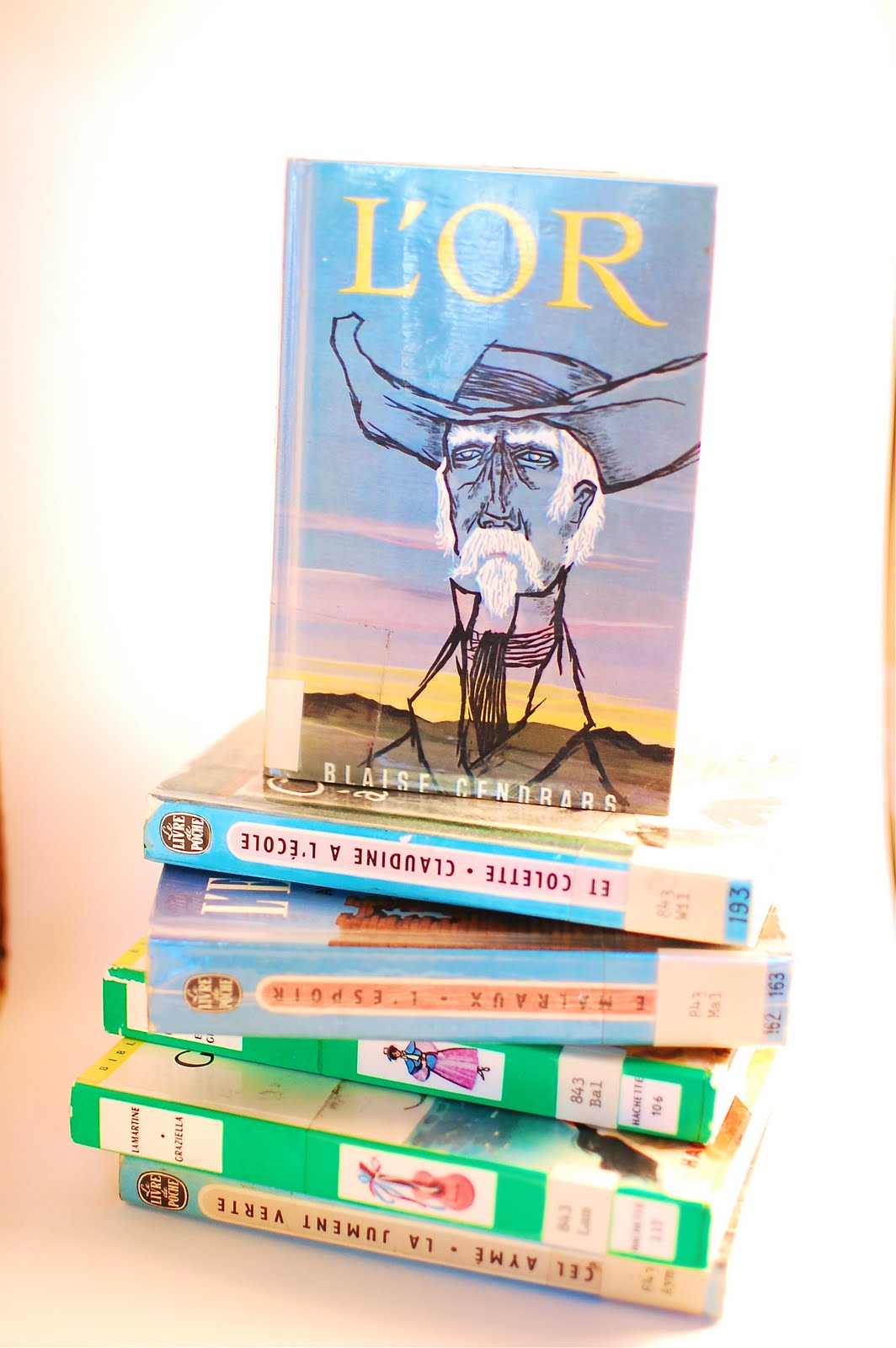
In honor of the Oscar sweep of The Artist, a movie I totally loved, I'm going to devote the next few days to a few French things I have lying about, starting with this series of French classics published by Hachette's Le Livre de Poche (Pocket Books): L'espoir by Andre Malraux, Graziella by Lamartine, Eugénie Grandet by Balzac, La Jument Verte by Marcel Aymé, Claudine a l'Ecole by Willy et Colette, and L'Or by Blaise Cendrars. I initially passed them up at my favorite Goodwill because they seemed a little overpriced for ex-library books, not to mention in French and I don't speak French. But I returned several days later, relieved to find them still there as I'd been obsessing about their covers all week. I can't find a date on any of them, but they've got to have been published in the time of midcentury awesomeness, no?
I came to my Francophilia somewhat late in life; I suppose it sprang from working for the same French company on two separate occasions but really that could have just as easily gone the other way. Repeated viewings of The Umbrellas of Cherbourg helped, as did actually going to Paris on someone else's seemingly limitless expense account. I was raised an Anglophile by Anglophile parents who'd met and married in England (though they are not British) and was fed a steady diet of teatimes, Upstairs Downstairs, Forsyte Saga, Monty Python and all things Austen. What I love about England is the landscape, music, pints, accents and literature. But the French have them on design, food, Sancerre, fashion (apologies to Vivienne Westwood, Paul Smith) and just the ability to make everything look cuter, like, you know, sailor shirts. Or matchbooks. Or book covers. If I read/spoke French, it's possible I'd even prefer their literature, though it seems heretical to say so. But since I've read all my Flaubert, Stendahl, Balzac, Zola, in translation, I can never be sure.


Monday, February 27, 2012
Shelved
I buy books that I've never read because I want to read them. I buy books that I have read because I no longer own a copy—either I borrowed it or checked it out from the library or loaned it out and never got it back. I buy books that I already have because I discover a different edition that's more attractive and/or valuable (sometimes I get rid of the old book, sometimes I don't). I buy books I've already read to give to my friends and family. I buy books for my kids to read now. I buy books for my kids to read in the future. I buy books for my friends' kids to read now or in the future. I buy books for my kids' teachers. I buy books because their covers are irresistible. I buy books because sometimes I can't believe the book exists. I buy books with a vague intention of selling them. I buy books because I'm a collector and a completist.
The latter reason is why I bought these beauteous Anchor Doubleday paperbacks designed by Edward Gorey. I documented my obsession with this series here, and I'm glad to say I only have around 193 to go. I doubt I will ever read The American Transcendentalists or The American Puritans. Maybe The Secret Agent but I'm not a big Conrad fan. Basically, I bought them so I could admire them.
I love books, as tangible objects, but don't get the wrong idea—I also read lots of books on my phone. In this way, and probably no other, I'm practically like a Japanese teenager.
Two Fridays ago, I went to an estate sale at a home that had the sort of library that no one has anymore. In addition to several sets of Encyclopedia Britannica and various editions of the OED, they had a complete set of the Great Books of The Western World. The Yale Shakespeare. The Heritage Press/Limited Edition Book Club. Numerous Modern Library books. And great towers of Life, Look and Time magazines. The rest of their library consisted of hardcover best-sellers and paperback literary classics and trade paperback book club fodder. I scooped up practically every book written by Barbara Pym (even though I already have them all) and a few by Kingsley Amis that I didn't have. These folks had been true generalists and serious readers, though I'm sure, like most of us, they couldn't claim to have read every book in their library. Let the record show that I purchased the Heritage Press editions of Herodotus, Picture of Dorian Gray, and Somerset Maugham's Moon and Sixpence and not one appeared to have ever been cracked open. Will I crack them open?.
They had also been book subscribers—you forget that mail order book clubs were once commonplace. I understand, having just googled it, that the Book of the Month Club does still exist, but does anyone know anyone who actually subscribes to it? And if there is any real value to it? Okay, your first four books are just a dollar, but how about the rest? Somewhere online I read an argument in favor of mail-order books—they're relatively inexpensive, the selections are made by highly trained, knowledgable editors and you never have to worry about going out to a bookstore in bad weather, or worse, finishing a book in the evening and not being able to get a new one because the book store is closed. Um. Somehow I'm thinking the book clubs need to rethink their business model before it's too late. Their demographic is aging—dying. I've seen it firsthand.
At this estate sale, I was, as usual, the youngest person in the room. Several elderly folks wandered around, peering at titles, and their verdict was unanimous: "What a lot of books!" One remarked: "I've never seen so many books." Still another said: "I don't need any more books! I have enough at home." An elderly gent mused: "I need another book. I just finished mine. What was it again?" His wife prompted him: "Have you read this one? You like this author."
Many of my old friends and colleagues are writing books, creating content, apps, scrambling to keep the printed word relevant. Meanwhile, that Friday afternoon, I was feeling very much out of the game, having relegated myself to the role of scavenger/savior trying to build the perfect library before it all disappears. I felt like Lord Grantham in Downton Abbey—while all the useful people were out in the trenches in France, I was obsolete, shuffling around the library with a few elderly companions and tsking over the latest news from the front.
After I paid for my books, one of the estate sale ladies helped carry them to my car. It was raining and we leaned over the boxes as we walked, trying to keep them dry. We chatted:
Me: They sure had a lot of great books. Did you have a lot more yesterday?
Her: Yes, but not that much more. We don't get the people coming to buy books like we used to. Everyone has to have one of those Kindle thingies now!
Me: Well, I love my Kindle but that doesn't mean I don't love real books as well...
Her: I can't imagine reading on a machine. I used to be a teacher and I have to feel a book in my hands. Like I taught my kids, and now my grandkids, "Let's read a few pages and then stop, put the book down, and try to visualize what the author is saying."
I thought it must take her a very long time to finish a book, but I didn't say so. What's the hurry, right?
Friday, February 24, 2012
More ’60s Vogue: All the young dudes
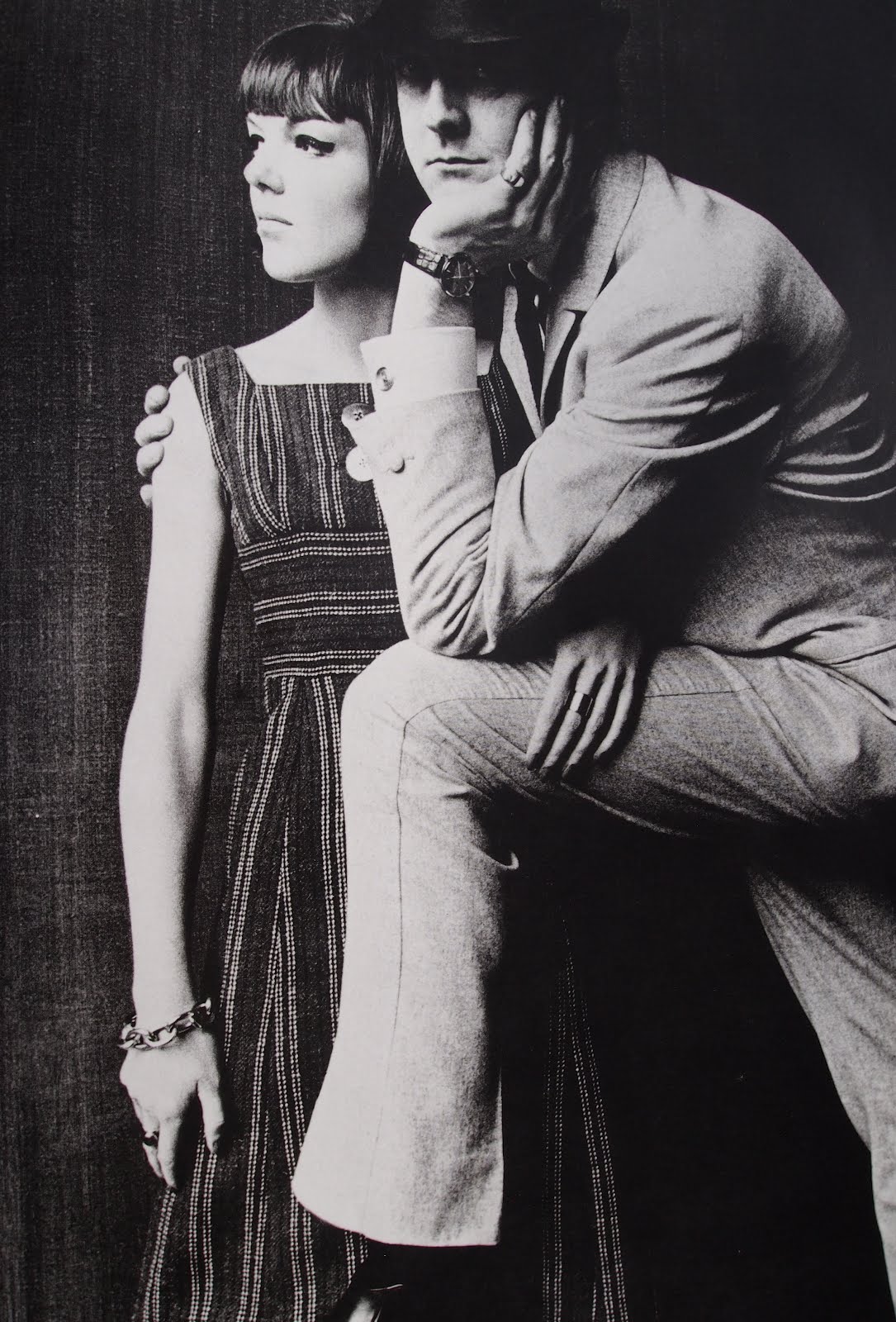
For your Friday viewing pleasure, more eye candy from The Sixties: A Decade in Vogue, starting with Terence Stamp (Terence Donovan, 1967), above, circa Far From the Madding Crowd, one of my favorite beautiful/depressing Thomas Hardy adaptations. Happy weekend!
Mick, "whose strange individuality will keep him a star. To women, Jagger looks fascinating, to men, a scare." (David Bailey, 1964)
Why hello, Tom Stoppard... (Snowdon, 1967)
Peter O'Toole (Jerry Bauer, 1963)
Mary Quant and Alexander Plunket-Greene (Brian Duffy, 1962). Sorry this is more about the dress than the dude. I'll post more in the future; can't help myself.
Thursday, February 23, 2012
Vogue!
How happy was I to score The Sixties: A Decade in Vogue (edited by Nicholas Drake) at an otherwise underwhelming library sale two weeks ago? As with the Scavullo book, it was pretty impossible to narrow down my choices to scan but it does seem bad form to scan the whole thing... I did my best, starting with cover girl Twiggy, a no-brainer of course. Those eyelashes! Those rings! Maybe I will scan some Vogue dudes tomorrow.
Do you recognize this winsome face? Maggie Smith, the dowager countess to end all dowager countesses. Gorgeous, right? (Bert Stern, 1963)
Shirley Maclaine, who will be joining the Downton Abbey cast for the third season, as Cora's mother and likely nemesis of Dame Maggie. I love this pic but her hands are scaring me a little—kind of like if that Oliver Stone movie with Michael Caine starred murderous jazz hands instead of just a regular old murderous hand. (David Bailey, 1965)
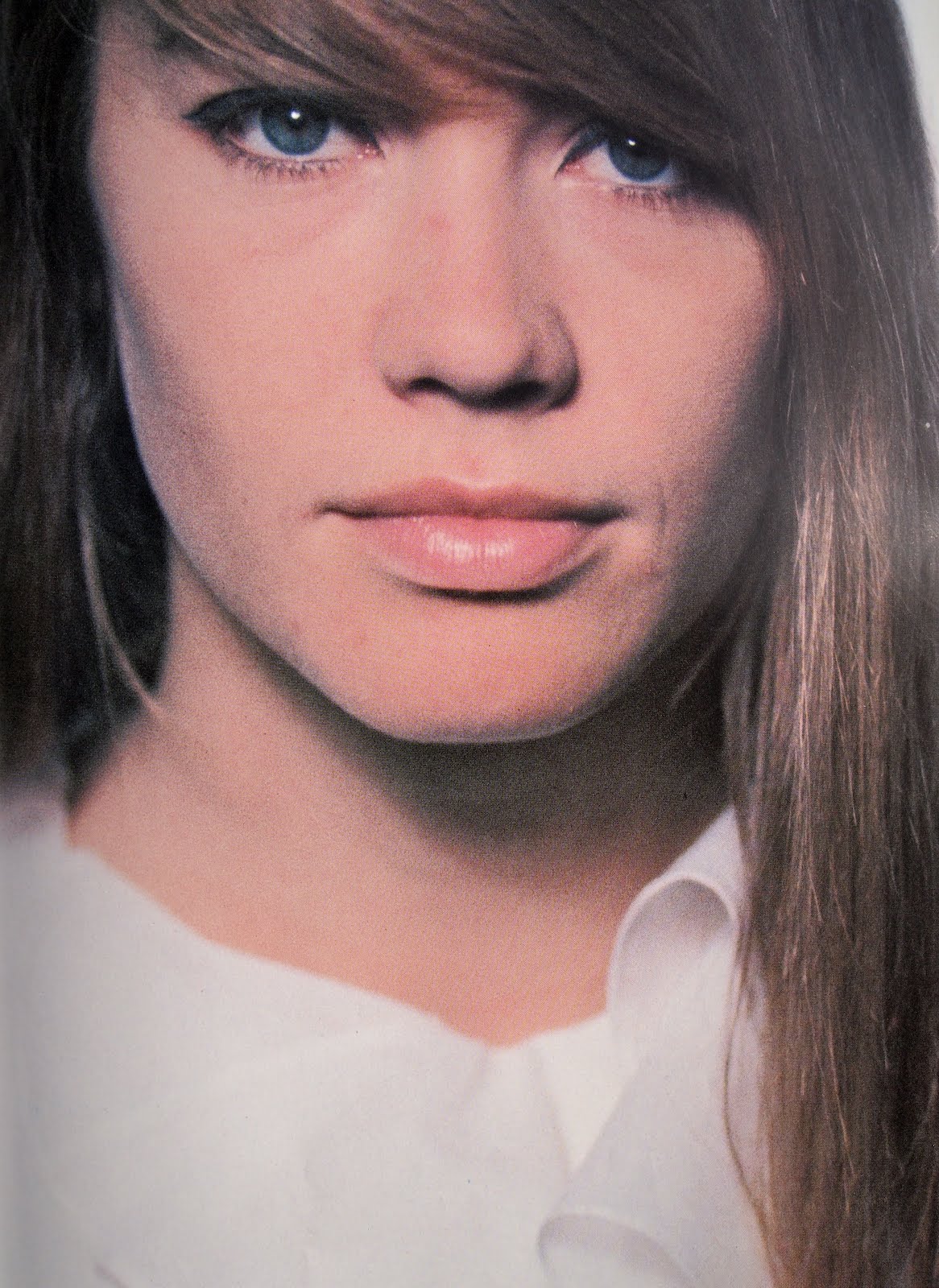
Francoise Hardy, at 18. What can I say? (Jean-Loup Sieff, 1964)
Jeanne Moreau. The perfect cat eye. (David Budnick, 1962)
Jean Shrimpton. Love everything about this picture. Which Stone did she date? (David Bailey, 1962)
Wednesday, February 22, 2012
Old school
I think we can all agree that it would be fairly tasteless if ads for estate sales always featured the profession of the deceased, but sometimes the estate sale companies just can't help themselves. Certain kinds of dead people attract more buyers. I've already discussed how the estate sales of doctors tend to be hot tickets, and I recently went to the sale of a person touted as San Antonio's Most Famous Flamenco Dancer. I bought San Antonio's Most Famous Flamenco Dancer's vintage telephone, as well as a box of her office supplies (never used, just $4).
But the one kind of sale I hate to miss is the kind that almost never gets played up in the ads: teacher sales. Especially art-teacher sales. That sounds horrible, right? Like I'm some kind of ghoul, gleefully rubbing my hands together in anticipation of more teachers dying? Well, I'm pretty sure most of the teachers whose sales I've attended were just moving into nursing homes—really nice nursing homes. And the rest were merely downsizing and relocating to Dallas to be closer to the grandchildren. (Yes, sometimes a little magical thinking is necessary if one is going to continue frequenting estate sales.)
Anyhoo, the thing is, the teachers' families didn't want their children's books and art supplies and crazy retro teaching materials but I do. Let the teachers' families fritter their lives away standing in line at the one open register at Michael's or Hobby Lobby; I'd much rather replenish the coffers of my kids' craft cabinets, art bins and desks at an estate sale.
A question I'm often asked as I wait in the check-out line—balancing stacks of kid books and old paintbrushes in the crook of one arm, brandishing my checkbook with the other—is, "Are you a teacher?" Nope. "A home-schooler?" Hell, no! When would I have time to go to estate sales? (Duh!)
I'm always psyched to come across Sakura Cray-Pas. They're versatile, easy to use and unbeatable for rendering rainbows. The Japanese company started making them in the 1920s, and they were specifically designed for children as part of a new movement in art instruction, which was kind of anti-art-instruction, encouraging kids to free draw instead of copy. A radical idea at the time, apparently. But even better than the cray-pas themselves are the boxes. They're so rad—dig that midcentury-style rooster!
If you buy new Sakura products online, the boxes don't pack the same graphic punch, though they are still being made. Whenever I'm in NYC, one of my must-stops is the Kinokuniya bookstore across from Bryant Park, where I spend way too much money on hamster stickers, Totoro pencil cases, the latest Moshi books, Moomin and Miffy stationery. The store has a great art supply section and stocks Sakura products in the rooster boxes, but a wee little pack of cray-pas is, like, twenty bucks. So far I've managed to back away slowly, knowing that before I make too big of a dent in my stash of vintage art supplies back in San Antonio, another retired teacher will be relocating to Dallas.
Tuesday, February 21, 2012
They're not bad...they're just drawn that way
Time to play my favorite estate-sale guessing game: What, exactly, were our late neighbors up to? What was going on behind those modest brick walls, beneath those popcorn ceilings, atop those shaggy shag carpets?
I got an armload of Walter T. Fosters at the home of yet another San Antonio Sunday painter. This person had all the great, and more rare, manuals devoted to pin-up girls (I already wrote about one here). But as I leafed through Drawing the Figure by Russell Tredell, what should fall into my lap?

A clipping from a mysterious periodical, an exposé about a "Free Love Cult in the Caves of Crete." Frustratingly, the text of the article was not saved; just this picture of a very limber free love cultist busting some kind of gymnastical yoga move on the beach of what I assume must be Crete.
This toothsome lass is on the flip side of the clipping. Free love cult member? We can only hope.
I wish I could report that after conducting a thorough investigation into the matter, I found out all kinds of interesting things about free love cults inspired by Eileithyia, the Cretan goddess of fertility who was born in one of the womb-like caves of Crete, but all I found out is that Crete has womb-like caves, many of which are believed to be the birthplace of mythological gods, including Zeus. Which makes the caves of Crete a pretty good place to start a free love cult considering Zeus was one of the earliest and most accomplished practitioners of the sport.

Subscribe to:
Posts (Atom)